A Frugal white paper
A blueprint for shift-left cost engineering.
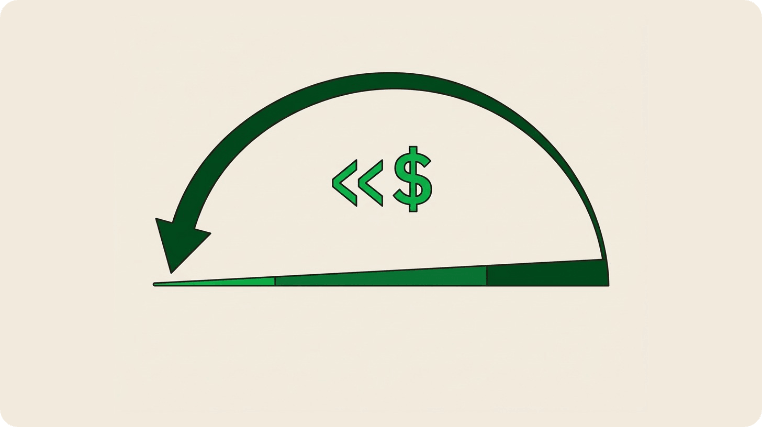
Your cloud and AI bill is set while software is designed, built, and reviewed. This paper maps the eight moments where cost gets decided, and gives your team a three-minute scorecard to see where it stands.
-
Eight moments where cost gets decided. From requirements to decommission, what good practice looks like at each point, traced through one real service.
-
Where the waste actually lives. Which waste rightsizing and commitments can reach, and which only a code change will fix.
-
The Shift-Left Cost Scorecard. Twelve yes-or-no questions your team can answer without tooling or a data pull.
Get the white paper
21 pages. Free. Instant PDF download.
29%
of cloud spend is wasted, the first increase in five years.
Flexera, 2026 State of the Cloud Report
100×
what a problem costs to fix after delivery, versus during design.
Boehm and Basili, IEEE Computer, 2001
10.5%
of revenue goes to cloud, on average, across 132 public SaaS companies.
Frugal analysis, October 2025
Why shift left
Cost is the last quality attribute still handled after release.
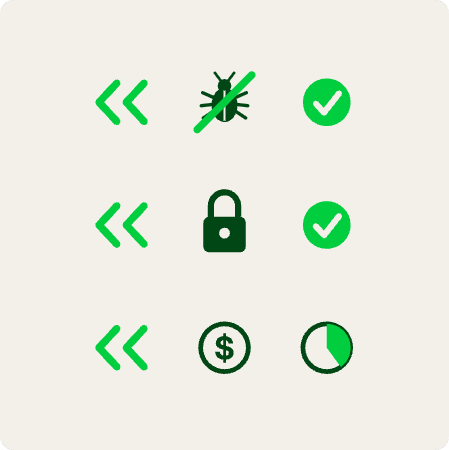
Defects, security vulnerabilities, and performance regressions all moved into design and implementation. Cost did not. Spend becomes visible when the invoice arrives, weeks after the architecture, service choices, and code paths that set the bill are already in production.
Rightsizing and commitment discounts don't change how many tokens a prompt consumes or how many objects a code path retrieves. As more spend moves into AI and usage-based services, more of the bill is decided in code.

What's inside
Eight moments where cost gets decided
The paper follows one invoice processing service from its first requirements conversation to the day it's switched off. At each moment there is an inexpensive way to get the decision right, available then and not afterward.
- 1
Requirements
The cost constraint before design.
Before it ships - 2
Architecture
The cost model and the load contract.
Before it ships - 3
Implementation
Cost context while the code is written.
Before it ships - 4
Instrumentation
Making a component account for its spend.
Before it ships - 5
Code review
Pricing the change before it merges.
While it runs - 6
Verification
The cost model against the bill.
While it runs - 7
Operations
Drift in load, prices, and tiers.
While it runs - 8
Decommission
Cost that outlives the feature.
When it's retired
From the paper
One step in the code, 40% of input token spend.
In the worked example, the first version of the service sends repeated headers, footers, and terms pages to the model on every document. Caught while the code is written, the fix is a change to one text-selection step. Caught a year later, it also means re-validating every document already processed, and the year of spend is gone.
Where the waste lives
Some waste can't be fixed with configuration.
Idle instances and oversized hosts show up in provider tooling. Waste in AI and usage-based services lives in application code, and no rightsizing tool will find it.

Impact of each lever, by cost category
| Cost category | Rate optimization | Rightsizing | Code change |
|---|---|---|---|
| Compute instances | High | High | Medium |
| Serverless compute | Low | Medium | High |
| Managed databases | Medium | Medium | High |
| Logs, metrics, and traces | Low | Low | High |
| Model inference | Low | Low | High |
Full table covers nine cost categories in section 5 of the paper.
The Shift-Left Cost Scorecard
Where does your team stand?
Twelve questions. Yes or no, no partial credit. Built for the team writing the code, not the finance function. Most careful engineering teams score between three and five today.
Visibility and ownership
Can you trace spend to the code that caused it?
Design
Do you build a cost model before you build the system?
Implementation
Do your coding agents know what things cost?
Review
Can a cost regression fail the build?
+ 8 more questions, and a one-page scorecard with what yes looks like and where to start.
Written for the people who decide what the bill will be
Engineering leaders.A practice to set as a standard, and a peer benchmark for the budget conversation.
Staff and platform engineers.What good looks like at each point in the lifecycle, with concrete numbers.
FinOps teams.Where rate and rightsizing work runs out of reach, and how to bring engineering in.
Get the blueprint.
21 pages on moving cost decisions to where they're actually made, with a scorecard to measure your team against.
Download the white paperWant to see where your team stands first? Get your Shift-Left Cost Scorecard
Want to see where cost lives in your own code? Book a code-level cloud waste audit